Frank's Random Wanderings

A bunch of random musings, with a leaning towards electronics & computers.
Options:

I’ve been doing a lot of work recently with the new ST processor, the STM32F2xx family. It’s a Cortex-M3 part running at 120 MHz. It’s a nice part, however I’ve lost a lot of time discovering, well, let’s not call them “bugs”, let’s instead call them “undocumented features” of the part. At the time of [...]

I’ve been using the Aptina MT9D131 image sensor for a new project. It’s an interesting chip. One of the great features of this chip is its ability to output JPEG images (which includes white balance, bayer interpolation, etc). That saves a great deal of processing from the host CPU. The chip is also readily available [...]

If you’re designing an electronics product that will ultimately be sold, you need to comply with EMI rules. FCC, CE / CISPR, whatever it might be in your market, these regulations set limits to how much EMI your product can radiate. After all, nobody wants the TV to stop working when your product is switched [...]

Texas Instruments has a very cool little MSP430 development kit, in the form of a watch. It’s called the Chronos. At the recent MSP430 seminars they had a 50% off offer, so for $25 I purchased one with the intent of modifying its software.
The really neat thing about this watch is that it contains what [...]

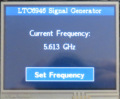
This was a fun and short little project that I’ve recently updated. If you’re thinking about building a cheap signal generator that’ll work to 20 MHz or so, and would be DDS (direct digital synthesis) based, take a look at this:
http://www.frankvh.com/dds-signal-generator.html
It works pretty well.

I had a need for a cheap, quick & not-so-dirty signal generator [...]

Over on AVRfreaks there are a lot of code snippets describing how to connect an AVR to a character LCD display, such as a standard HD44780-compatible display. But not a lot talking about how to do the same using an Xmega.
For a small project I’d been working on, I had an LCD display connected [...]

It seems that every little widget (processor or whatever) I work with has a serial port on it, which is extremely handy for printing status and debugging information, etc. These serial ports are of course “TTL” level, which means they’re at the level of whatever the part’s I/O voltage is, usually 3.3V but not always. [...]

Time marches on and we’ve had to perform a new PCB revision for the board containing the Atmel Xmega part. So I had the opportunity to add an external voltage reference to the chip. This was one of the things I recommended considering in my last post.
There are some constraints. We wanted the reference’s voltage [...]

I’ve been working with the A/D converter on the Atmel Xmega AVR processors, and it’s been quite the handful. At this point in time (Jan 2010) the parts have some very serious issues, and I’ve lost a lot of time trying to get them to work as advertised. This posting is to share what I’ve [...]

Atmel kindly gave me an Xplain Xmega board at one of their Xmega seminars. It’s a useful tool for ATXmega development, but it does have a couple of problems. I thought I’d mention the ones I’ve tripped over, in case anybody else sees the same problems.
Board Doesn’t Restart Properly
I’ve found that when the AVRISP2 programmer [...]

Categories

Calendar

February 2012
M T W T F S S
« Jan    
 12345
6789101112
13141516171819
20212223242526
272829